What is SEO, really? Beyond keywords and title tags.
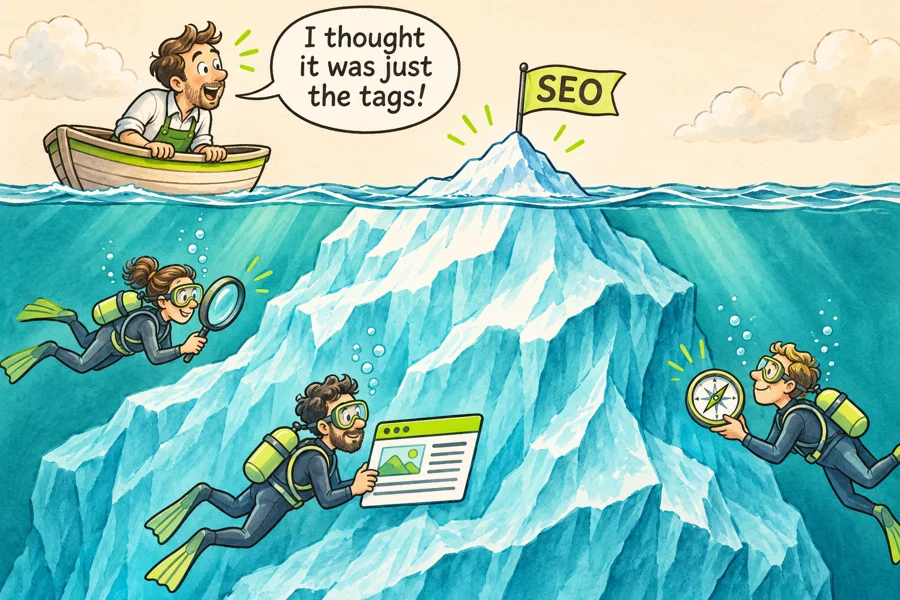
The visible details are only the tip of the iceberg. Effective SEO connects the searches that matter to your business with pages that genuinely help people—and make the next step easy. This guide explains what that work involves and how to identify the right SEO services for your business.
Get found for the right reasons. Give people a reason to choose you.
SEO—search engine optimization—is the work of helping relevant people discover your business through search. That means understanding their questions, building useful answers, making those answers accessible to search engines, and earning credibility.
01
Find the opportunity
Which searches connect what you do with the customers you want?
02
Deliver the answer
What would genuinely satisfy someone making that search?
03
Help them act
What evidence and next step would help them become a customer?
Tags matter. But tags cannot turn an unhelpful page into a useful answer.
THE STRATEGY / THE TECHNIQUES
Video is a powerful part of the picture. SEO is the bigger picture.
You will find several detailed video strategy guides on this website. That emphasis is deliberate: showing real work, explaining decisions and letting customers see the people behind a business can be particularly powerful. But video is one technique within a broader SEO and conversion strategy—not the whole service.
Video turbocharges SEO
Show the answer, don’t just describe it. Useful demonstrations and project stories enrich your pages, while supporting text and transcripts help make the detail discoverable. Well-published video also opens another route through video search.
Video turbocharges CRO
Turn claims into visible proof. Let customers see your work, hear your expertise and meet the people behind the business—building trust, answering doubts and making it easier to inquire or buy.
Choose the technique to serve the customer’s need. Some pages benefit from video. Others need a clearer explanation, a useful comparison, pricing guidance, stronger project evidence or a simpler route to inquire. The right SEO service identifies those priorities and uses the appropriate mix.
Put video to work as part of a purposeful SEO and conversion strategy. The impact comes from relevant content and thoughtful execution—not simply adding a player.
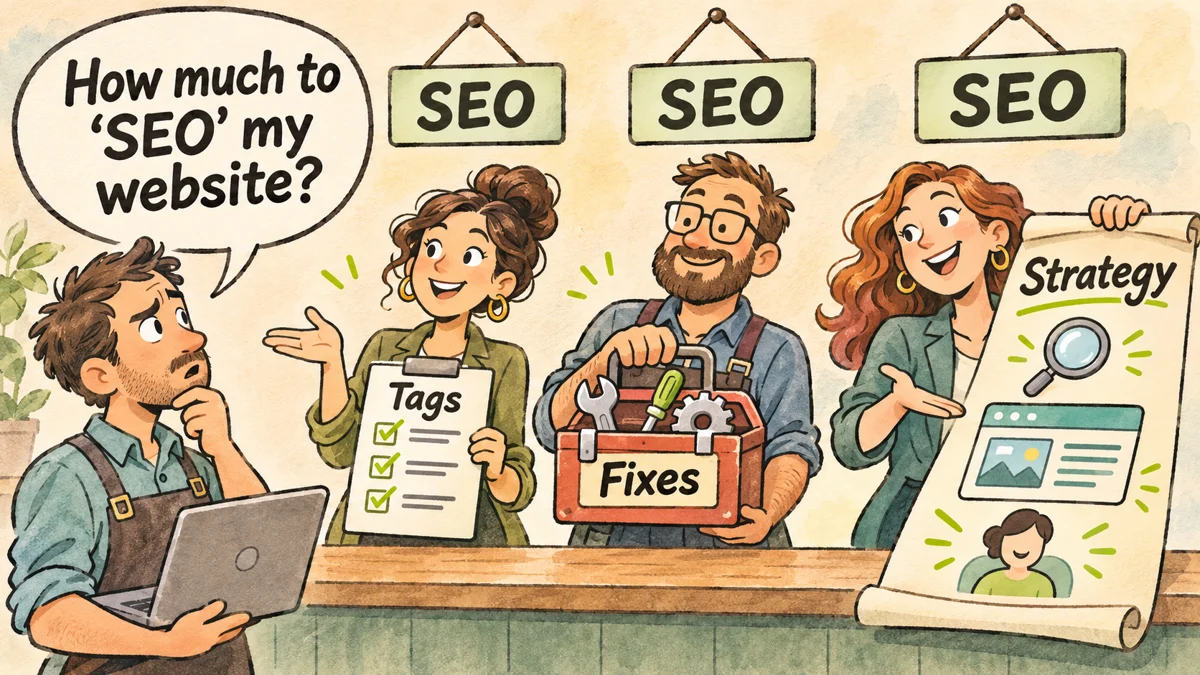
After more than 20 years in the mainstream of website marketing, SEO is still widely misunderstood. Ask several providers what their SEO service includes and you may receive very different answers.
So when a business owner asks what it costs to “SEO” a website, it is a reasonable question. The problem is that it sounds like a single, clearly defined job: complete a checklist, pay the invoice, and the website is now “SEO’d.”
There are useful one-time jobs: fixing an indexing problem, correcting misleading titles, or repairing broken links. But a broader SEO strategy also asks which customers you want, what they search for, what your existing pages fail to explain, and what needs to be created or improved.
The same label can describe very different work. Ask what is included—and what your business actually needs.
The part everyone can see
Element
What it actually does
Page title
Describes the page’s subject and can influence the title shown in search results. Make it accurate, clear and specific.
Meta description
Offers a concise preview that may help someone choose your result. Google may instead show a snippet drawn from the page.
Headings
Organize the answer so people and search systems can understand its main topic and supporting sections.
Image alt text
Provides a useful text alternative for meaningful images and helps explain their content. It is not a place to cram in keywords.
These are worthwhile details. But they describe and organize what is already there. The larger opportunity is often deciding what ought to be there in the first place. Google’s SEO Starter Guide explains these basics, while its snippet guidance explains how descriptions may appear in results.
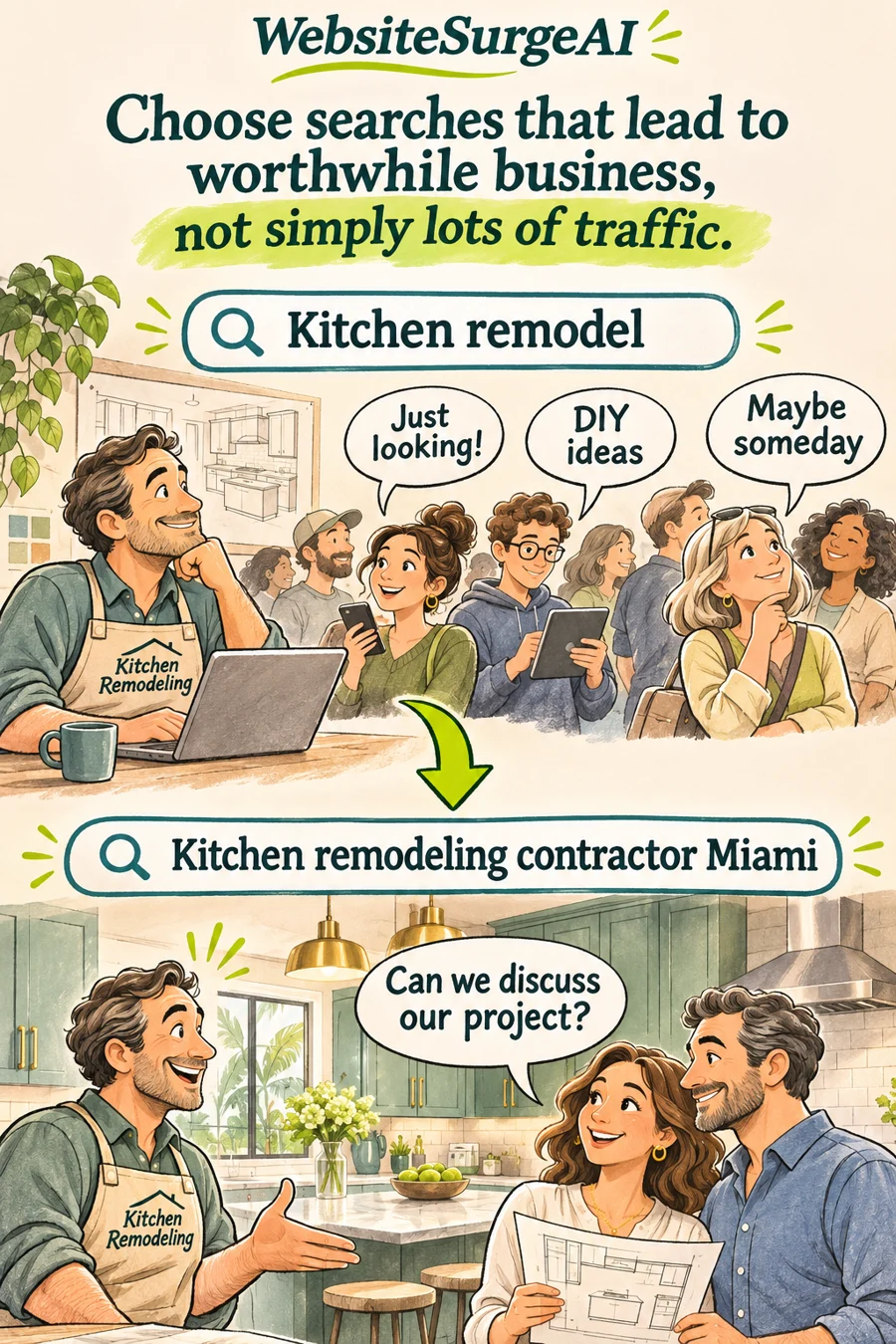
1. Choose searches that could lead to worthwhile business.
Start with the business, not a spreadsheet of popular keywords. What do you sell? Where do you operate? Which work is profitable? What questions do serious prospects ask before they buy?
A specific search with modest volume may be more valuable than a broad phrase attracting people who will never become customers. “Kitchen remodel” could mean design inspiration, simple kitchen updates or a DIY project. “Modern kitchen remodeling contractor Miami” gives us more clues about the service, style and location someone may need.
Relevance: can the business genuinely deliver what the search implies?
Commercial value: could answering this need contribute to a worthwhile sale or relationship?
Opportunity: what already ranks, and can we offer something useful enough to compete?
Coverage: does a suitable page already exist, or is an important customer question unanswered?
Search-volume and difficulty figures are estimates to guide judgment. They do not replace knowledge of the business, and a long phrase is not automatically an easy phrase to rank for.
2. Look behind the words: what does this person want?
Search intent means the purpose behind a search. Two people interested in the same service can need completely different answers. One is researching possibilities. Another is comparing providers. A third has a problem that needs fixing now.
ONE BUSINESS / THREE DIFFERENT NEEDS
The phrase is a clue. The page must deliver.
Similar subject. Different question. Build the answer around the person behind the search.
SEARCH INTENT 01
Plan the budget
“Kitchen remodel cost”
WHAT THEY WANT TO KNOW
Can I afford this, and what changes the price?
WHAT YOUR PAGE SHOULD DELIVER
Realistic ranges, what is included, cost drivers and representative examples.
THE NATURAL NEXT STEP
→Discuss a realistic project budget.
SEARCH INTENT 02
Find the right specialist
“Modern kitchen remodel Miami”
WHAT THEY WANT TO KNOW
Who can create this style of kitchen here?
WHAT YOUR PAGE SHOULD DELIVER
Relevant projects, design choices, local experience and credible proof.
THE NATURAL NEXT STEP
→Request a design consultation.
SEARCH INTENT 03
Solve a specific problem
“Kitchen cabinet replacement”
WHAT THEY WANT TO KNOW
Can I replace my worn kitchen cabinets without remodeling the entire kitchen?
WHAT YOUR PAGE SHOULD DELIVER
Cabinet options, replacement versus refacing, installation considerations and service coverage.
THE NATURAL NEXT STEP
→Arrange an assessment.
Illustrative content-planning examples—not keyword-volume estimates or promises of rankings.
Review the actual search results to test your assumptions. Are people being shown service pages, product listings, videos, comparisons or guides? Then combine that evidence with the questions your customers really ask.
3. Create the answer people hoped to find.
This is where SEO becomes a craft: part science, part art. The science helps identify opportunities and measure outcomes. The art is understanding what someone is unsure about and explaining the subject in a way that makes their decision easier.
The science
Research queries and competing results. Check technical access. Map topics to pages. Track search performance and business outcomes. Test changes.
The art
Recognize the real question. Choose the right examples. Explain tradeoffs. Show convincing evidence. Make a complicated decision feel manageable.
A page about cost should explain cost. A page about a service should explain what the business does, who it helps, how the process works and why a customer can trust it. Repeating a search phrase cannot substitute for those answers.
The client supplies the knowledge that makes the content distinctive.
The most useful details often live in the owner’s head, the team’s project notes, customer conversations and photographs of completed work. What went wrong? Why was one solution chosen over another? What surprised the client? What should the next customer understand before starting?
An SEO provider can research, interview, organize, write and optimize. AI can help with those tasks too. But neither should invent experience, project results, quotations or expertise. Collaboration with the business is how a generic article becomes a credible answer.
Sometimes the best next action is improving an existing page rather than adding another. Fill gaps, update outdated information, add real examples and reconsider whether its content still matches the intended search. Our guide to refreshing and extending project content explores this approach.
Google says its systems aim to prioritize helpful, reliable content created for people. Meeting the need supports that goal, but does not guarantee a ranking. Competition, relevance, links and other signals also matter. “They stayed longer, therefore Google ranks us higher” is too simple a description of how search works.
4. Make the answer discoverable, usable and credible.
Excellent content still needs a sound foundation. Technical SEO, internal linking and reputation belong beneath the waterline too.
BE FOUND
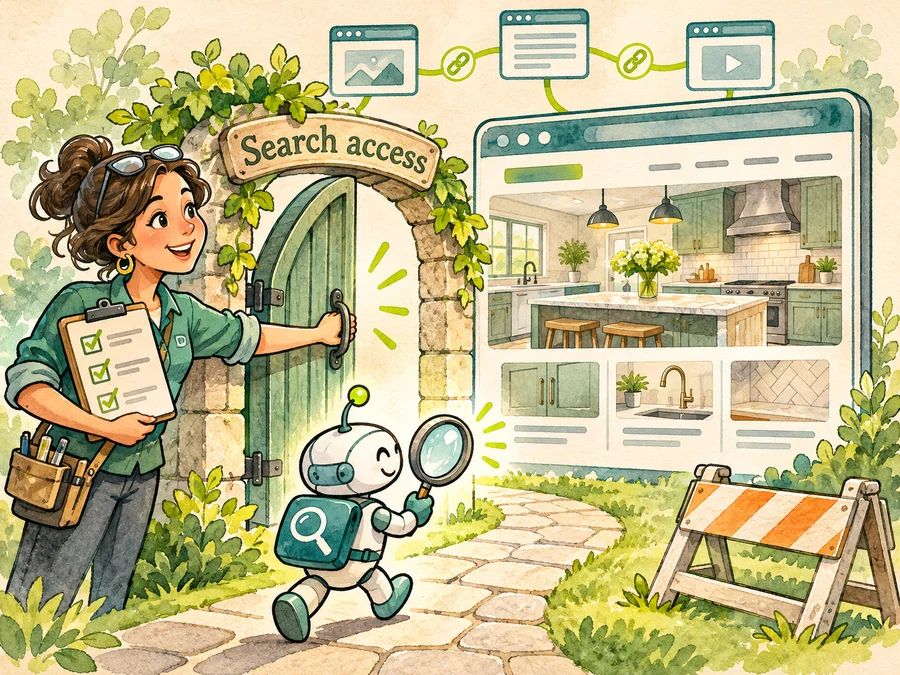
Technical access
Make sure search engines can reach the answer.
Before a page can compete in search, a search engine needs to discover its address, retrieve its content and decide whether to include it in its index. A useful page can miss that opportunity if it is accidentally blocked, broken or disconnected from the rest of the website.
What it takes to implement
Inspect the important pages. Use Google Search Console’s page indexing reports and URL Inspection to investigate what Google can access. Check the actual page too: a report is a starting point for diagnosis, not a repair.
Remove unintended barriers. Fix broken internal links and server errors. Review crawl controls and “noindex” instructions, which tell search engines not to index a page. Keep intentional restrictions on private or non-search pages.
Keep page addresses consistent. When a page moves, redirect its old address to the relevant replacement. Check canonical tags—the preferred address for duplicate or similar versions—and maintain a sitemap listing the pages intended for search.
For example: A kitchen cost guide should be reachable from the service page, load successfully and be available for indexing. Adding it to a sitemap helps discovery; it does not guarantee that Google will index or rank it.
What you should see from the work
A documented list of issues, the fixes made, and follow-up checks on the affected pages.
MAKE SENSE
Clear structure
Give every important question a logical home.
A website should help people move naturally from a broad service to the details they need. Clear structure means deciding which topics deserve their own pages, how those pages relate, and which links will help a visitor continue. It also gives search engines clearer context.
What it takes to implement
Map topics to customer needs. List the services, questions and locations that matter to the business. Assign each distinct need to a suitable page; improve an existing page when it already serves that purpose.
Connect the relevant pages. Link a service overview to its cost guide, relevant projects and process explanation. Use descriptive wording such as “kitchen remodeling costs” so people can anticipate the destination.
Maintain the routes. Make important pages reachable through useful navigation and contextual links. Find orphan pages with no internal links, repair broken routes and review overlapping pages before adding more.
For example: A homeowner might move from “Kitchen remodeling” to a cost guide, then to a comparable project and a consultation. Each page answers a different question and makes the next useful destination obvious.
What you should see from the work
A clear page plan, purposeful internal links and fewer dead ends—not simply a longer menu.
REMOVE FRICTION
A usable experience
Make the answer easy to read—and act on.
Getting a visitor onto a page is only useful if they can use it comfortably. Small text, slow images, awkward menus or a failing form can undo otherwise persuasive content. This work supports both access to the information and the visitor’s next decision.
What it takes to implement
Test real customer journeys. On phones and computers, try finding a service, viewing a project and making an inquiry. Check keyboard navigation, visible focus, readable contrast, descriptive labels and helpful form errors.
Fix the causes of delay. Measure loading and interaction performance, then address the actual bottlenecks. Resize and compress images, reserve space for media to prevent jumps, and reduce unnecessary scripts where practical.
Remove avoidable effort. Use clear headings, comfortable text and controls that are easy to tap. Keep forms focused, explain what happens after submission and verify that inquiries reach the business.
For example: A homeowner viewing a project on a phone should be able to read the explanation, see the photos and request help without pinching, hunting for a button or losing their form entries.
What you should see from the work
Tested improvements to specific journeys, with working forms and fewer obstacles for real visitors.
EARN CONFIDENCE
Credibility and reputation
Show why this business deserves to be trusted.
Claims such as “experienced” or “high quality” mean little without evidence. Credibility comes from showing the people, work and knowledge behind the business. Reputation also develops beyond your own website through genuine customer feedback, relevant mentions and professional relationships.
What it takes to implement
Collect first-hand evidence. Interview the owner and team, gather project photographs and record the decisions, challenges and outcomes. Identify who did the work and obtain permission for customer stories and images.
Make the evidence useful. Publish detailed project examples, accurate team biographies and relevant qualifications. Use genuine testimonials with permission and explain the service process clearly. Never invent experience, results or reviews.
Keep the wider picture accurate. Maintain current contact details, service areas and business listings. Invite honest customer feedback without requiring a positive review, and earn relevant links through useful work and relationships.
For example: A kitchen project becomes stronger proof when it explains the original problem, why a particular cabinet solution was chosen, and shows the finished result—not just an attractive stock photograph.
What you should see from the work
A growing collection of verifiable proof that helps customers assess fit. No single trust score guarantees rankings.
Website trust signals deserve particular attention: a visitor needs reasons to believe what you say. Clear evidence also gives search systems more context about the business. There is no universal “trust score” that guarantees rankings or AI recommendations.
Structured data can describe eligible page content in a machine-readable format. It should accurately reflect what visitors can see; it is not a substitute for evidence or a guaranteed search enhancement. Google’s Search Essentials sets out its technical and content foundations.
5. SEO brings the opportunity. CRO helps turn it into business.
CRO—conversion rate optimization—means improving the chances that a visitor takes a useful action. That could be a purchase, a qualified inquiry, a booked appointment or permission to receive marketing emails.
Although conversion happens after discovery in the customer’s journey, it should be planned while the page is being created. The search, the answer and the next step need to fit together.
THE PAGE HAS TWO JOBS
Answer the question. Make the next decision easier.
“Here is what affects the cost. Here are examples of our work. Here is what happens in a consultation. Ready to discuss your project?”
Resolve uncertainty: explain the service, process, fit and likely questions before asking for a commitment.
Provide evidence: use relevant projects, genuine testimonials and clear explanations.
Match the next step: offer a consultation to someone evaluating a project; offer a useful guide to someone still learning.
Remove friction: make the action easy to find, the form usable and the response expectations clear.
A large button cannot rescue an unconvincing offer. And a high form-submission rate is not necessarily success if the inquiries are unsuitable. The aim is more valuable customer relationships, not just more clicks.
6. Measure the result, then improve the work.
SEO is an ongoing decision process, not endless activity for its own sake. Use the evidence to decide what deserves attention next.
Question
Evidence to examine
What it may suggest
Are we being found?
Indexing, relevant search impressions and queries
Technical problems, missing topics or weak search visibility
Are the right people visiting?
Search clicks, landing pages and the relevance of inquiries
A mismatch between the searches targeted and the customers wanted
Does the page help them act?
Calls, forms, bookings or purchases relative to relevant visits
Gaps in the answer, evidence, offer or next step
Is it worthwhile for the business?
Qualified leads, sales, customer value and delivery effort
Where further investment is most likely to be useful
Search Console helps explain Google search visibility. Website analytics and business records help connect visits with actions and sales. Attribution is imperfect: a customer may return later, call directly or encounter several pages before deciding.
Review trends over a sensible period and account for seasonality, changes in demand and other marketing. Google notes that changes can take anything from hours to months to be reflected in search, and not every change produces a noticeable improvement.
7. When buying SEO, ask what the work actually includes.
Two proposals called “SEO” may represent very different services. One may cover technical maintenance and metadata. Another may include research, client interviews, new pages, project documentation, conversion improvements and ongoing analysis.
Neither scope should be hidden behind the same vague label. Ask for the actual deliverables, the reasoning behind them, the client input required and the way success will be assessed. A provider should be able to explain why its proposed mix of content, technical work, trust-building, video and conversion improvements fits your business—not simply sell the same bundle of activities to everyone.
Which customers and searches are we trying to reach?Look for a connection to your services, location, capacity and business priorities.
Which pages will you create or improve, and why?Ask what each page will help a potential customer understand or do.
How will you obtain real knowledge and evidence from us?Clarify interviews, project information, photographs, review and approvals.
What technical, trust and conversion work is included?Understand the scope beyond keywords, and what remains your responsibility.
How will we know whether the work is helping?Expect useful reporting on relevant visibility and business outcomes, with clear limits on attribution.
Our fee funds the work your business needs most.
We charge for SEO aimed at helping your business grow. Depending on the priority, that can mean building or improving the website, creating and marketing videos, helping you produce them, writing useful content, improving technical SEO, or refining title tags and other page details. These activities belong to the same monthly service.
We agree what will make the most useful contribution, then put your available monthly capacity toward it. The focus can change as obstacles are resolved and new opportunities emerge. The objective is relevant visibility, trust and business inquiries—not simply completing the same checklist every month.
A more useful way to ask the price question
“What work would give our business the best chance of attracting and converting the customers we want—and what can we accomplish within our monthly budget?”
A budget determines the amount and pace of work possible; it does not buy a guaranteed position in Google. Our approach at Holistic Web Presence is an ongoing monthly retainer, with priorities agreed around the business and its available budget.
A useful first step is to identify the biggest obstacle: technical access, missing answers, weak evidence, unclear positioning or a poor conversion path. The work should follow that diagnosis.